
Introduction
Vocational courses are job-specific, skill-focused programmes that train students for particular trades, industries, or technical roles. Unlike academic degrees, vocational education prioritises hands-on practice and industry readiness — often in 6 months to 2 years. In India, vocational courses are gaining enormous momentum under the Skill India mission, National Education Policy 2020, and NSDC’s growing network of training centres.This guide covers the best vocational courses after 12th in 2026 — with institutions, salary expectations, government support, and real-world career paths.
Also See


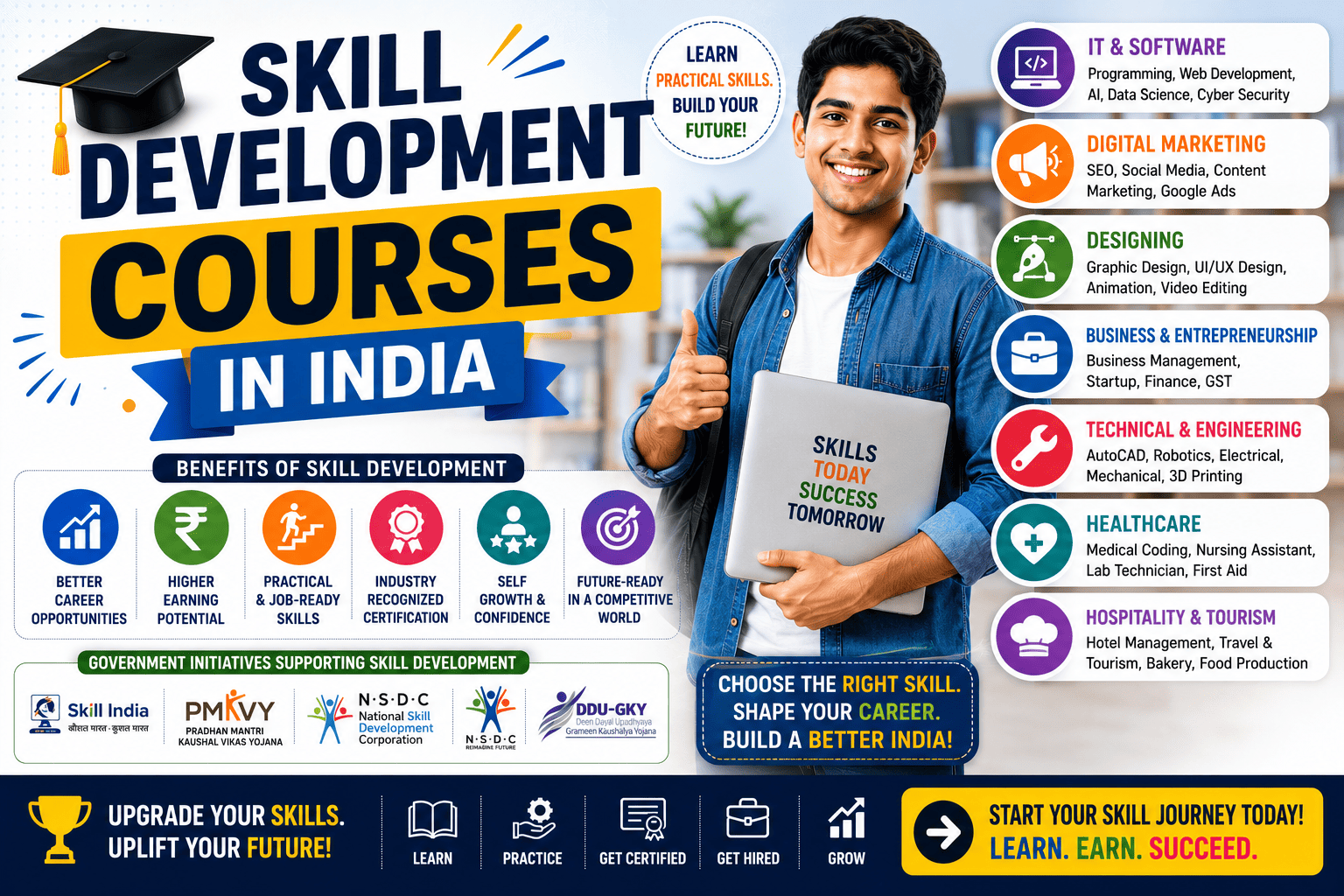
Overview: Best Vocational Courses After 12th
| Vocational Course | Duration | Sector | Starting Salary |
|---|---|---|---|
| ITI (Industrial Training Institute) | 1–2 years | Technical Trades | ₹1.5–4 LPA |
| Diploma in Electrical Technology | 1–2 years | Electrical | ₹2–5 LPA |
| Diploma in Plumbing & Sanitation | 1 year | Construction | ₹2–6 LPA (Gulf: ₹6–15 LPA) |
| Diploma in Automotive Technology | 1–2 years | Automotive | ₹2–5 LPA |
| Diploma in Welding Technology | 6 months–1 year | Manufacturing | ₹2–6 LPA (international demand) |
| Diploma in HVAC (Air Conditioning) | 6 months–1 year | Refrigeration | ₹2–6 LPA |
| Diploma in Beauty & Cosmetology | 6 months–1 year | Beauty | ₹2–8 LPA |
| Diploma in Culinary Arts / Chef | 1–3 years | Hospitality | ₹2–8 LPA |
| Diploma in Photography | 6 months–1 year | Media | ₹2–8 LPA (freelance) |
| Diploma in Textile Design | 1–2 years | Textile | ₹2–5 LPA |
| Diploma in Retail Management | 6 months–1 year | Retail | ₹2–4 LPA |
| Diploma in Healthcare / Paramedical | 1–2 years | Healthcare | ₹2–5 LPA |
Top Vocational Courses Explained
1. ITI (Industrial Training Institute)
ITI trades are among the most widely recognised vocational qualifications in India. Over 14,000 ITI centres operate across India under the Directorate General of Training (DGT). Popular trades include Electrician, Fitter, Turner, Welder, Draughtsman Civil/Mechanical, Stenographer, and Computer Operator. After ITI, graduates can join Railways, PWD, DRDO, and private manufacturing companies. They can also pursue Diploma through lateral entry at polytechnics.
2. Diploma in Electrical Technology
Electricians are in constant demand in construction, infrastructure, manufacturing, and maintenance. An electrical diploma from a government ITI or polytechnic qualifies you for maintenance electrician roles, electrical contractor licences, and overseas employment — especially in Gulf countries where skilled electricians earn ₹8–20 LPA.
3. Diploma in Plumbing & Sanitation
Skilled plumbers are in high demand globally — particularly in the Gulf, UK, Canada, and Australia. A 1-year plumbing diploma qualifies you for construction projects, real estate developers, and industrial facilities. In India, experienced plumbers earn ₹4–8 LPA; internationally, ₹10–25 LPA. Demand has surged with India’s Smart Cities Mission and real estate boom.
4. Diploma in Automotive Technology
India’s auto sector — including EVs, two-wheelers, and commercial vehicles — is growing rapidly. Automotive technician roles at Maruti, Tata Motors, Honda, and EV companies are in high demand. An automotive technology diploma qualifies students for service centre roles, dealership mechanics, and EV battery technician positions.
5. Diploma in Culinary Arts
Chefs and culinary professionals are in strong demand in hotels, restaurants, airlines, and cruise ships. A 1–3 year diploma in culinary arts from NCHM-affiliated institutes opens doors to 5-star hotel kitchens and international culinary careers. Celebrity chefs and executive chefs earn ₹25–75 LPA.
6. Diploma in Beauty & Cosmetology
The beauty and wellness industry in India is a ₹1 lakh crore+ market growing at 20% annually. Cosmetology diplomas from Lakme Academy, VLCC, and similar institutes qualify graduates for salon management, skin care, bridal makeup, and their own beauty parlour. Skilled cosmetologists earn ₹3–15 LPA; top bridal makeup artists earn ₹50,000–₹5 lakh per event.
7. Diploma in Photography / Videography
Photography and videography are highly entrepreneurial vocational careers. With weddings, corporate events, e-commerce, YouTube, and social media creating massive demand for visual content, skilled photographers can earn ₹3–15 LPA in employment or ₹10–50 LPA as established freelancers and wedding photographers.
Top Institutes for Vocational Courses
| Course | Top Institutes |
|---|---|
| ITI Trades | Government ITI centres (DGT-approved) in every district; craft certificates by NCVT |
| Culinary Arts | IHM Pusa Delhi, IHM Mumbai, WGSHA Manipal, Academy of Pastry Arts |
| Beauty & Cosmetology | Lakme Academy, VLCC Beauty School, Jawed Habib Academy, AAFT |
| Photography | ICAT Design & Media College, Bharatiya Vidya Bhavan, Light & Life Academy |
| Automotive Technology | J.D. Institute, AISECT, Government Polytechnics |
| Textile Design | NIFT (diploma), NID, Government Textile Institutes (Maharashtra/Tamil Nadu) |
| Paramedical | AIIMS (paramedical diplomas), Government Medical College allied health institutes |
Salary Comparison
| Course | India Starting Salary | Gulf/International Salary | Entrepreneurship Potential |
|---|---|---|---|
| Electrician (ITI) | ₹2–4 LPA | ₹8–20 LPA (Gulf) | Own contracting business |
| Plumber | ₹2–5 LPA | ₹10–25 LPA (Gulf/UK) | Own plumbing business |
| Chef / Culinary | ₹2–5 LPA | ₹10–30 LPA (ships/hotels) | Own restaurant/cloud kitchen |
| Beauty / Cosmetology | ₹2–5 LPA | ₹8–20 LPA (UAE/UK) | Own salon / bridal studio |
| Photographer | ₹2–6 LPA | High demand internationally | ₹10–50 LPA (established) |
| Automotive Tech | ₹2–4 LPA | ₹6–15 LPA (Gulf) | Own service station |
Government vs Private Vocational Institutes
| Factor | Government ITI / Polytechnic | Private Vocational Institute |
|---|---|---|
| Fees | ₹5,000–₹30,000/year | ₹20,000–₹2 LPA |
| Certificate | NCVT / State Council — widely recognised | Institute-specific — varies in recognition |
| Industry Connections | Good in manufacturing and railways | Better in hospitality, beauty, media |
| Scholarship | NSP/PMKVY scholarships available | Limited; check institute-specific aid |
Traditional vs Modern Vocational Courses
| Parameter | Traditional (ITI/Polytechnic) | Modern (Digital/Creative) |
|---|---|---|
| Duration | 1–2 years | 6 months – 1 year |
| Demand | Steady — infrastructure always needed | High growth — digital economy expanding |
| International Scope | High (Gulf, construction, manufacturing) | High (remote work, freelancing globally) |
| Entrepreneurship | Own business (electrician, plumber) | Own agency, studio, online business |
Scholarships for Vocational Students
- PM Kaushal Vikas Yojana (PMKVY) — Free short-term skill training + ₹8,000 cash reward for NSDC-recognised courses
- AICTE Saksham Scholarship — For differently-abled students in AICTE-approved vocational programmes
- NSP Post-Matric Scholarships — For SC/ST/OBC/EWS students in any vocational or diploma programme
- State ITI Scholarships — Most state governments offer free or heavily subsidised ITI training for reserved categories
- National Apprenticeship Promotion Scheme (NAPS) — Stipend for apprentice trainees at industries; government pays 25% of stipend
- Deen Dayal Upadhyaya Grameen Kaushalya Yojana — Free vocational training for rural youth aged 15–35
Future Scope of Vocational Education in India
India has a massive skilled worker shortage — the Skill India mission aims to train 400 million people by 2022 (ongoing). National Education Policy 2020 integrates vocational education into mainstream schooling from Class 6 onwards. Global demand for Indian skilled workers — electricians, plumbers, chefs, welders, and IT technicians — in Gulf, UK, Canada, and Australia is at an all-time high. The ILO projects that vocational training will be the backbone of India’s manufacturing and services growth through 2030.
Tips for Vocational Course Students
- Always choose NCVT or government-recognised certification — it’s valid across India and for government jobs
- Look into the National Apprenticeship Portal (apprenticeshipindia.org) for paid on-the-job training
- Gulf employment is highly lucrative for skilled trades — register with NSDC’s overseas placement network
- Combine a technical ITI with digital skills (basic computer, English communication) for better salaries
- Start with PMKVY free training — it has no financial risk and provides industry-recognised certification
- Join trade associations — IEEMA for electricians, PLASA for AV/lighting professionals, etc.
- Document your work with photos and videos — build a portfolio on Instagram for photography/cosmetology/culinary careers
- Consider entrepreneurship from Day 1 — many successful electricians, salon owners, and photographers started with a diploma
- For culinary and hospitality, international cruise ship and hotel placements are excellent stepping stones
- Use RPL (Recognition of Prior Learning) if you already have experience in a trade — it provides formal certification without full training
Common Mistakes to Avoid
- Enrolling at an unrecognised private institute that offers no NCVT or government certification
- Choosing a vocational course without researching local job market demand for that trade
- Not pursuing apprenticeships — practical experience is essential in vocational trades
- Stopping at a certificate without thinking about business or entrepreneurship
- Ignoring international opportunities — Gulf, UK, and Canada actively recruit Indian skilled workers
- Not applying for PMKVY or state skill development schemes that provide free training
- Overlooking the lateral entry to diploma route after an ITI — it significantly improves career prospects
- Avoiding digital upskilling — a plumber who can use scheduling apps or an electrician who knows basic wiring software earns more
- Not keeping certification documents updated — licenses for electricians, HVAC technicians, and plumbers expire and need renewal
- Missing the RPL (Recognition of Prior Learning) scheme if you have informal trade experience
Frequently Asked Questions
1. What is the best vocational course after 12th in India?
ITI Electrician, Diploma in Culinary Arts, Diploma in Beauty & Cosmetology, and Diploma in Automotive Technology are among the best vocational courses — offering strong employment, entrepreneurship potential, and international demand.
2. Is a vocational course better than a degree?
For specific trades, vocational courses offer faster employment and often better starting income than general degrees. However, for senior management, research, or professional careers, a degree still provides better long-term growth. The ideal path for many students: vocational course + lateral entry degree.
3. What is NCVT certification and why is it important?
NCVT (National Council for Vocational Training) certifies ITI courses at the national level. NCVT certificates are recognised across India and by many international employers — especially in Gulf countries. Always choose an NCVT-affiliated ITI over unaffiliated private institutes.
4. Which vocational course has the best international demand?
Plumbing, Electrical, Welding, Nursing (GNM), and Culinary Arts have the highest international demand — particularly in Gulf countries, UK, Canada, and Australia. Skilled Indian tradespeople are among the most sought-after globally.
5. Can girls pursue vocational courses?
Absolutely. Cosmetology, Fashion Design, Culinary Arts, Healthcare, Photography, Textile Design, and IT-related vocational courses are popular and excellent choices for girl students. Many government ITIs also have trades specifically designed for women.
6. What is PMKVY and how to enrol?
PMKVY (Pradhan Mantri Kaushal Vikas Yojana) offers free short-term skill training with a cash reward upon certification. Enrol at your nearest PMKVY training partner centre or through the Skill India Digital portal (skillindiadigital.gov.in).
7. Can ITI graduates get government jobs?
Yes. ITI certificate holders are eligible for many government posts — particularly in Railways (Technician Grade III), SSC (multi-tasking), DRDO, PWD, and state government maintenance roles. Many state PSCs also advertise ITI-level technical posts.
8. What is the salary of an ITI Electrician in India?
Freshers earn ₹1.5–3 LPA in India. With experience (3–5 years), earnings rise to ₹4–8 LPA. Government posts for ITI electricians (Railways, PWD) offer ₹25,000–₹40,000/month. In Gulf countries, experienced electricians earn ₹8–20 LPA equivalent.
9. Is photography a viable career in India?
Yes — particularly wedding photography and videography, which is a ₹50,000+ crore industry in India. Skilled wedding photographers earn ₹1–5 lakh per wedding. Commercial photographers working with brands and e-commerce earn ₹5–20 LPA.
10. What are the best vocational courses for rural students?
DDUGKY (Deen Dayal Upadhyaya Grameen Kaushalya Yojana) offers free vocational training for rural youth in trades like masonry, electrical work, tailoring, and IT. This scheme provides stipends and free accommodation during training for eligible rural students.
11. Can I do a vocational course alongside my regular degree?
Yes — many short-term vocational courses (3–6 months) are part-time and can be pursued alongside a degree. This gives you both a formal qualification and practical vocational skills.
12. Which vocational course is best for entrepreneurship?
Culinary Arts (restaurant/cloud kitchen), Beauty & Cosmetology (salon/studio), Photography (studio/events), and Electrical/Plumbing (contracting business) offer the strongest entrepreneurial potential among vocational courses.
Conclusion
Vocational education in India is undergoing a renaissance. The stigma once associated with “trade” careers is fading as skilled workers — electricians, chefs, cosmetologists, and photographers — build highly successful and often entrepreneurial careers. With strong government support through PMKVY, NSDC, and NEP 2020, vocational courses are becoming a mainstream and respected pathway to financial independence and career satisfaction.
Skill is the new degree. Choose a vocational path that plays to your strengths and watch your career thrive.