
Introduction
Government jobs in India have always been more than just employment — they represent stability, social respect, and a secure future. Every year, millions of candidates compete for thousands of vacancies across central and state government departments. From railways and banking to defence and civil services, the range of opportunities is enormous.
Also See
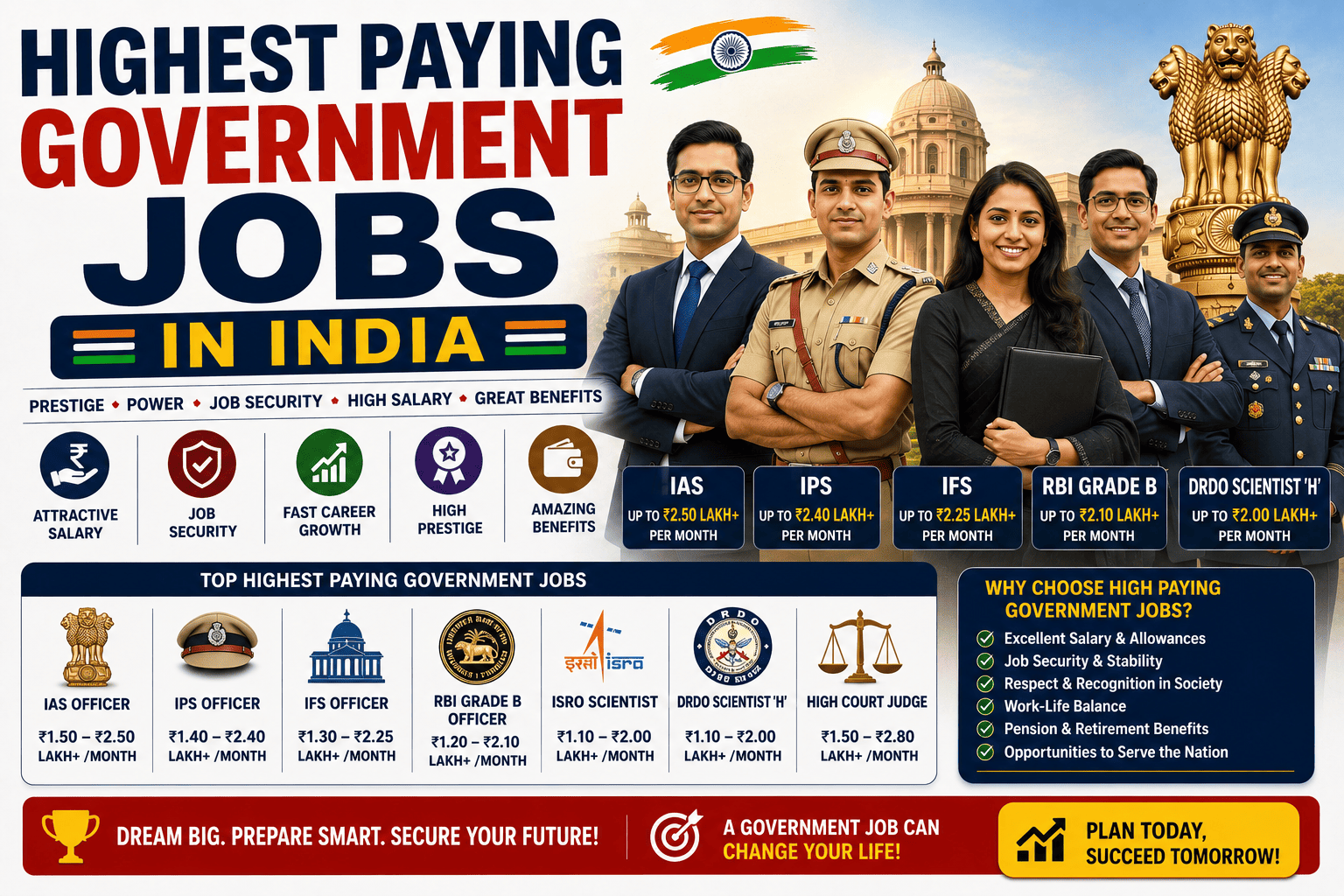
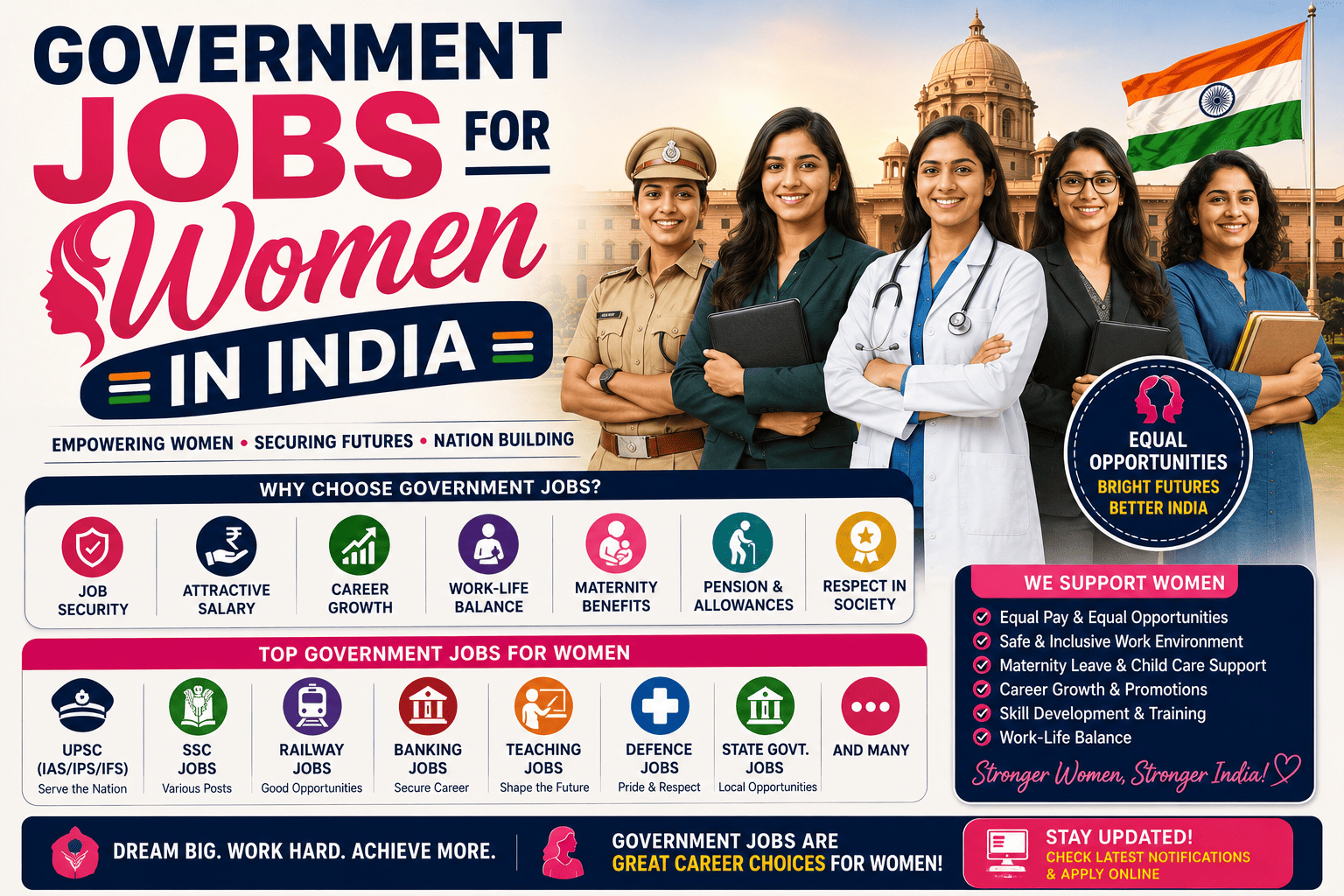
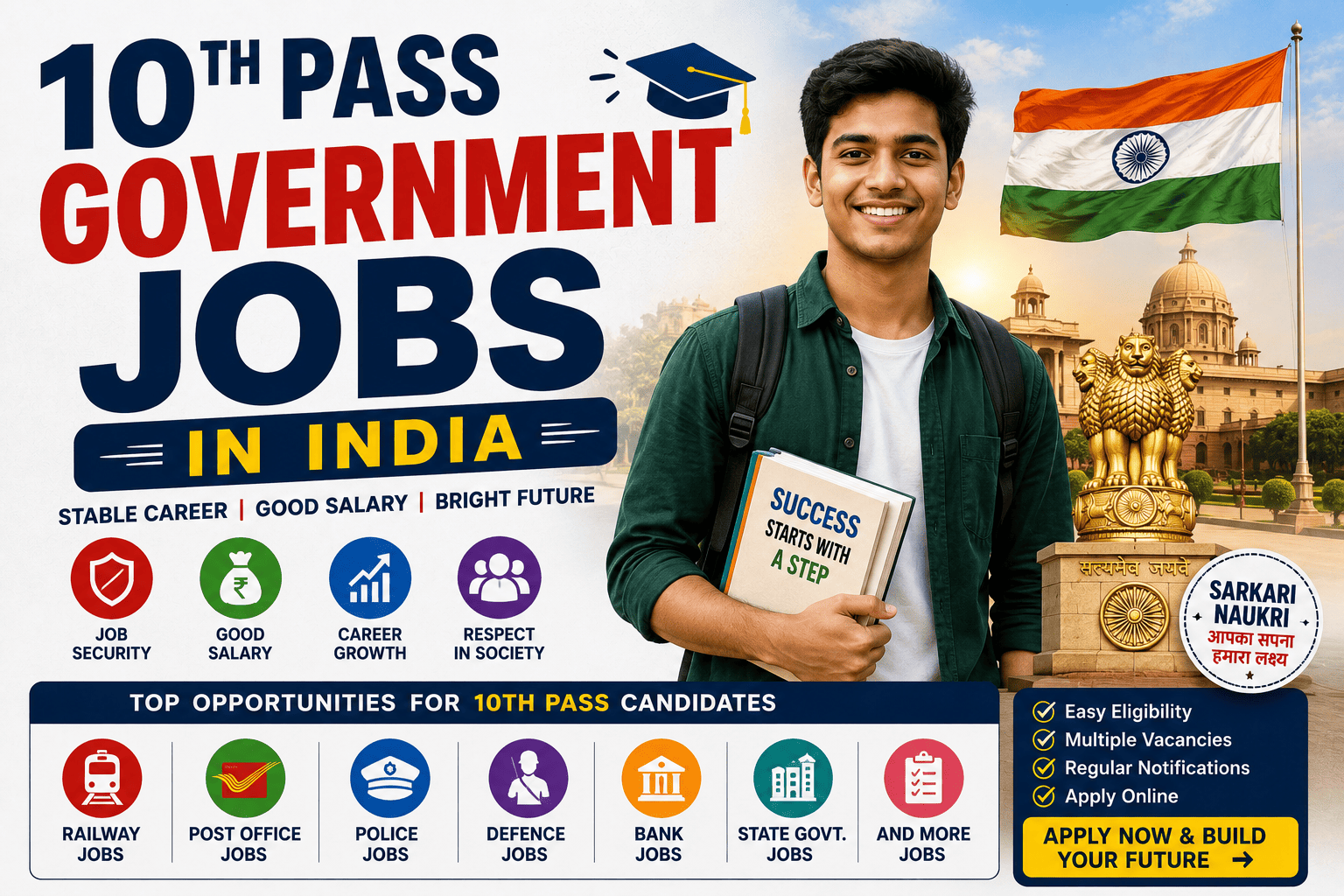
If you are actively searching for the latest government jobs in India, this guide covers everything you need to know — from eligibility criteria and age limits to the selection process, salary structure, and application steps.
Overview of Government Jobs in India
India’s public sector is one of the largest employers in the world. Recruitment happens at two broad levels:
- Central Government Jobs — conducted by bodies like UPSC, SSC, RRB, IBPS, and NRA. These cover positions in civil services, railways, banking, defence, paramilitary forces, and central ministries.
- State Government Jobs — managed by State Public Service Commissions (PSCs) and state-level boards. These include teachers, police constables, revenue officers, clerks, engineers, and more.
Vacancies are released throughout the year. Popular recruitment drives include SSC CGL, SSC CHSL, IBPS PO, RRB NTPC, UPSC Civil Services, and various state PSC examinations.
Eligibility Criteria
Educational Qualification
Educational requirements vary widely depending on the post:
- 10th Pass (Matriculation) — Multi-Tasking Staff (MTS), Group D Railway posts, lower-grade peon roles
- 12th Pass (Intermediate) — SSC CHSL, certain constable vacancies, LDC posts
- Graduate — SSC CGL, IBPS PO/Clerk, RRB Junior Engineer, UPSC CSE (Prelims)
- Postgraduate / Professional Degree — Specialist Officer (SO) in banks, IAS/IPS/IFS (after clearing UPSC Mains), research-level positions
Nationality
Applicants must generally be Indian citizens. Certain posts related to defence and intelligence require stricter citizenship verification. Some vacancies are also open to citizens of Nepal, Bhutan, and Tibet (under specific conditions as per government norms).
Experience
Most entry-level government positions do not require prior work experience. However, lateral entry schemes, specialist officer roles, and senior administrative positions may ask for 2–10 years of relevant experience.
Age Limit
The standard age criteria for most central government jobs is:
- Minimum Age: 18 years
- Maximum Age: 27–35 years (varies by post and department)
Age relaxations apply to the following categories:
- OBC candidates: 3 years relaxation
- SC/ST candidates: 5 years relaxation
- PwD (Persons with Disabilities): 10 years (General), 13 years (OBC), 15 years (SC/ST)
- Ex-servicemen: As per government rules (typically 3–5 years beyond the upper limit)
- Widows/Divorced women: Up to 35–45 years for certain posts
Always check the official notification for the exact age criteria, as it differs across departments and examination bodies.
Selection Process
1. Written Examination
Most recruitments begin with a Computer-Based Test (CBT) or offline OMR-based exam. This tests subjects like General Awareness, Reasoning, Quantitative Aptitude, and English Language.
2. Skill Test / Physical Test
Posts in railways, police, paramilitary, and certain clerical roles require a data entry speed test, typing test, or physical fitness test (PFT) covering running, long jump, and high jump.
3. Interview / Personality Test
Senior-level posts — especially Group A and B services — include a personal interview or UPSC-style personality test after written rounds.
4. Document Verification
Shortlisted candidates must produce original certificates — marksheets, caste certificates, domicile proof, ID proof, and photographs — for verification before final appointment.
5. Medical Examination
A physical and medical fitness test is mandatory for many departments including railways, defence, and police.
Salary & Benefits
Government employees in India receive salaries as per the 7th Central Pay Commission (7th CPC) framework. Here is a general overview:
| Post Level | Pay Level (7th CPC) | Approximate Gross Salary |
|---|---|---|
| Group D (MTS, Peon) | Level 1–2 | ₹18,000 – ₹25,000/month |
| Group C (Clerk, LDC) | Level 2–5 | ₹25,000 – ₹40,000/month |
| Group B (SSC CGL, IBPS PO) | Level 6–8 | ₹40,000 – ₹65,000/month |
| Group A (IAS, IPS, IFS) | Level 10–17 | ₹56,100 – ₹2,50,000/month |
Beyond the base salary, government employees receive:
- Dearness Allowance (DA)
- House Rent Allowance (HRA)
- Travel Allowance (TA)
- Medical benefits and health insurance
- Provident Fund (PF) and Gratuity
- Pension under the National Pension System (NPS) or Old Pension Scheme (OPS, state-specific)
- Job security with no risk of sudden layoff
- Paid leave, maternity/paternity leave, and holidays
How to Apply
Follow these steps to apply for any government job vacancy in India:
- Visit the official recruitment website — e.g., ssc.gov.in, rrbcdg.gov.in, ibps.in, or the relevant state PSC portal.
- Read the official notification carefully — check eligibility, age limit, vacancies, and important dates.
- Register online — create an account using your email ID and mobile number.
- Fill in the application form — enter your personal, educational, and category details accurately.
- Upload documents — photo, signature, and any required certificates in the specified format and size.
- Pay the application fee — via net banking, UPI, debit/credit card, or SBI challan (fee waiver applies for SC/ST/PwD/women candidates in many exams).
- Submit and download the confirmation — save a copy of the submitted application for future reference.
Required Documents
Keep the following documents ready before applying:
- 10th & 12th marksheets and certificates
- Graduation degree/marksheet (if applicable)
- Date of birth proof (Aadhaar, birth certificate, or 10th certificate)
- Caste certificate (OBC/SC/ST) issued by the competent authority
- Domicile/Residence certificate
- Aadhaar card or any valid government photo ID
- Passport-size photographs
- Scanned signature
- PwD certificate (if applicable)
- Ex-serviceman discharge certificate (if applicable)
Tips to Increase Your Selection Chances
- Start with the syllabus — download the official syllabus and exam pattern before buying any books or courses.
- Practice previous year papers — solve at least 5–7 years of past question papers to understand the difficulty and pattern.
- Take mock tests regularly — timed practice builds speed and accuracy, both critical in competitive exams.
- Focus on General Awareness — this section differentiates toppers. Read a national daily newspaper and follow official government portals.
- Set a study timetable — consistency over 3–6 months beats cramming a month before the exam.
- Join a reliable online course or test series — platforms like Testbook, Adda247, and Unacademy offer structured preparation material.
- Track official notifications — bookmark the official SSC, UPSC, RRB, and IBPS websites and check them weekly.
Common Mistakes to Avoid
- Submitting applications without thoroughly reading the eligibility criteria
- Uploading wrong photo/signature formats, which leads to form rejection
- Missing application deadlines — government portals close exactly at the stated time
- Ignoring negative marking rules and attempting every question blindly
- Relying on unofficial or rumour-based vacancy information
- Neglecting physical fitness preparation for posts that require a PFT
- Not keeping document originals ready for verification after selection
Frequently Asked Questions (FAQ)
1. Which government job is best for a 10th pass candidate?
SSC MTS (Multi-Tasking Staff) and Railway Group D are among the most popular and widely available government jobs for 10th pass candidates in India.
2. How do I find the latest government job notifications?
Always check official portals such as ssc.gov.in, upsc.gov.in, rrbcdg.gov.in, and ibps.in for authentic and up-to-date vacancy information.
3. Is there an age relaxation for OBC candidates in central government jobs?
Yes. OBC (Non-Creamy Layer) candidates receive 3 years of age relaxation over the general category upper age limit in most central government recruitment examinations.
4. What is the salary of an SSC CGL officer?
SSC CGL officers are placed at Pay Level 4–8 under the 7th CPC, with an approximate in-hand salary ranging from ₹35,000 to ₹65,000 per month depending on the post and city.
5. Can a female candidate apply for all government jobs?
Yes, women can apply for the vast majority of government positions. Some posts in defence, police, and paramilitary have gender-specific vacancies. Many departments also offer additional age relaxation and fee waivers for women.
6. How many attempts are allowed for UPSC Civil Services Exam?
General category candidates get 6 attempts up to age 32. OBC candidates get 9 attempts up to age 35. SC/ST candidates have unlimited attempts up to age 37.
7. Is coaching mandatory for cracking government exams?
No, coaching is not mandatory. Many candidates crack SSC, IBPS, and even UPSC examinations through self-study. What matters most is a structured study plan, consistent practice, and quality study material.
8. What is the difference between Group A, B, C, and D government jobs?
Group A and B are gazetted officer-level posts (higher responsibility and pay), while Group C includes clerical and technical staff, and Group D covers support/auxiliary roles. Entry qualification and salary increase progressively from Group D to Group A.
Conclusion
Government jobs in India continue to attract millions of aspirants every year — and for good reason. The combination of job security, competitive salary, generous allowances, pension, and social prestige makes sarkari naukri one of the most sought-after career paths in the country.
Whether you are a 10th pass candidate eyeing a Railway Group D role or a graduate preparing for UPSC Civil Services, the key is to stay informed, prepare consistently, and always refer to official sources for recruitment notifications.
Bookmark the official websites of SSC, UPSC, IBPS, RRB, and your state’s Public Service Commission. Check back regularly — new vacancies are released throughout the year, and being among the first to apply gives you a head start.
Your dream government job is within reach. Start preparing today.